On the Road Again License Plates
White, blue, yellow, ruby-red, green… The license plates on cars are as varied as the world's countries and legislations. Today we are highly accepted to seeing them on the vehicles that movement through the cities and the highways, merely they weren't e'er there.
When the auto was invented, in that location were so few of them that it didn't seem necessary to identify them with a license plate. Very, very few people had the means to buy a car, and then information technology was easy to know who owned that noisy contraption that moved around without the aid of horses.
Only things got more than complicated when those automobiles began to exist mass-produced, their price went down and they became much more than numerous. How was it possible to know who owned a automobile that was involved in an accident, for example, if they weren't identified in some manner? The solution was to find a organisation by which to identify with complete certainty both vehicle and owner. And that's how license plates were born.
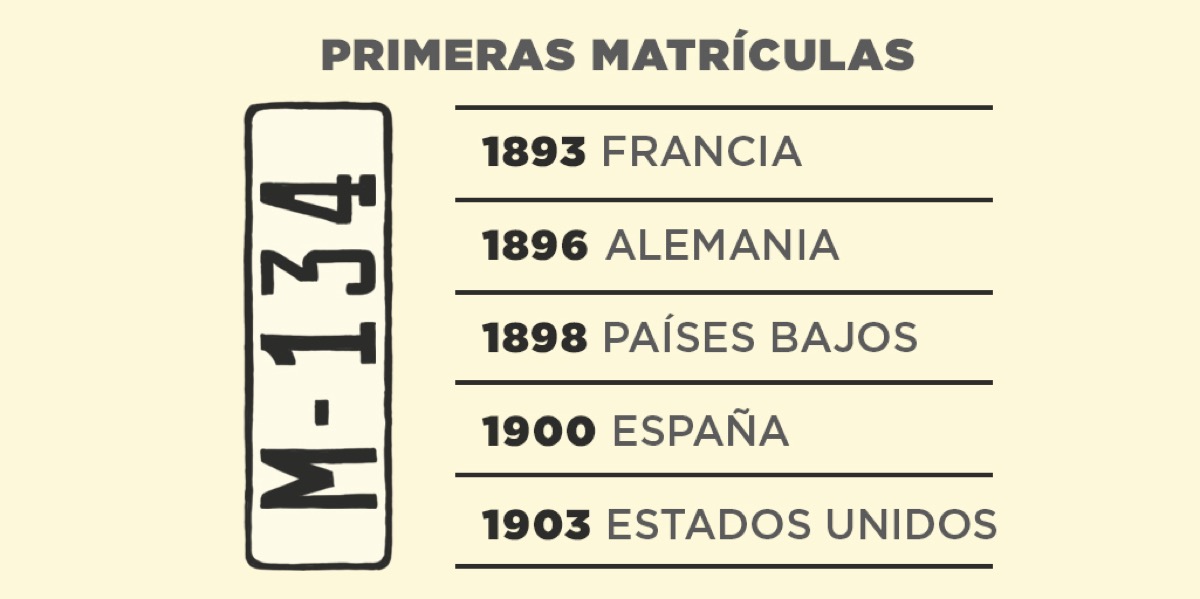
The start one in the globe was issued in France in 1893, through the Paris Ordinance. Iii years later, in 1896, the first car license plate was registered in Germany. In 1898, the Netherlands was the first country to introduce a national license plate, which they called a driving allow. These early license plates had a number beginning with 1, something that was maintained until 1906, when the system changed.
License plates in the U.s.a.
In 1901 all French vehicles had license plates. This organization was being extended to other European countries. Now it was time to cantankerous the pond to America.
The get-go license plates began in the United States that same twelvemonth, although here things got a little complicated: each different state had its ain automotive legislation. The first to impose license plates was New York, thank you to an order by governor Benjamin Odell Jr. Merely instead of being manufactured by an official body, it was the car owners themselves who had to make their license plate , past hand, out of pieces of leather or metal, indicating the owner of the vehicle by his initials. These plates had to exist located on the rear end of the motorcar. Information technology wasn't until 1909 that the state of New York began to effect official plates.
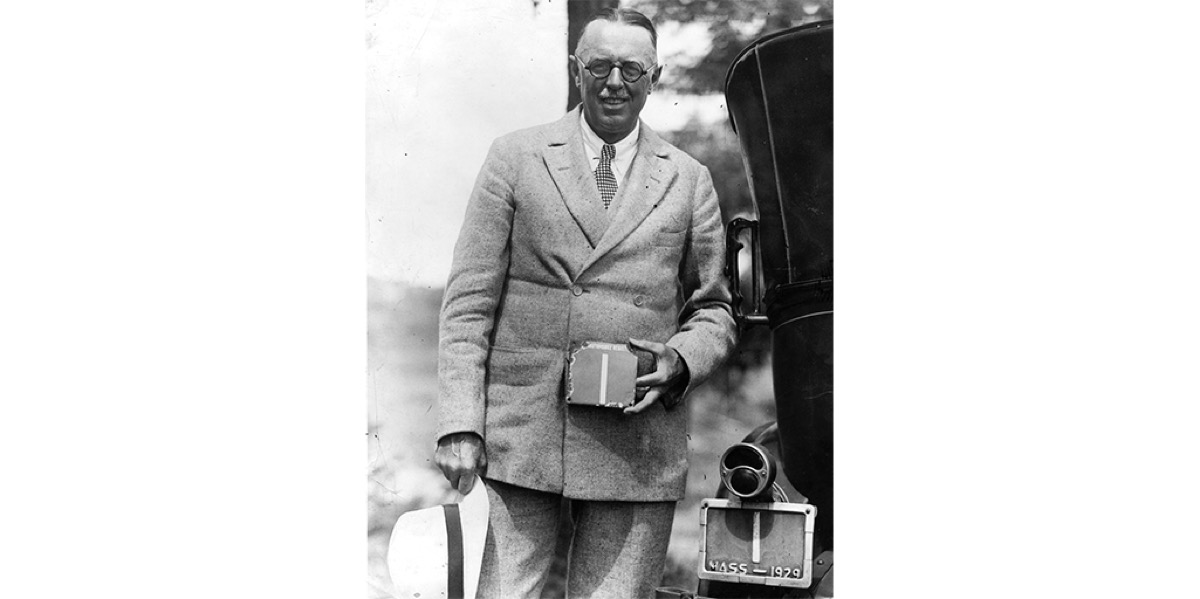
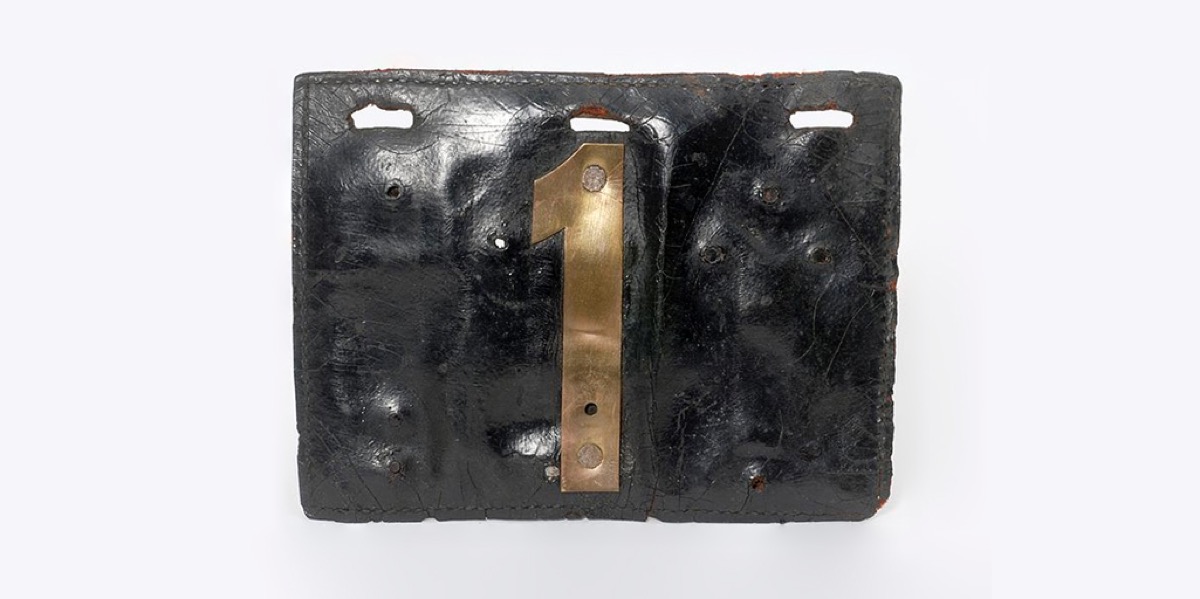
In Massachusetts, the commencement official plates were distributed in 1903. The get-go ane, with the number i, was issued in the proper noun of Frederick Tudor. Ane of his descendants however maintains information technology with that same number.
Pennsylvania, for its part, became the first state to issue the first official license plate, in 1903, and cheers to this these identification plaques extended to many more states. Decades later, in 1931, it issued the first personalized license plate. It wasn't quite like those that are seen today throughout the country, only information technology did include the owner's initials among the numbers. Those highly personalized plates that we know today were created in 1965, and are an important source of government revenue, considering the automobile owner must pay some extra fees.
Meanwhile, in Spain…
The gasoline automobile came to Spain at the end of the 19th century. It is idea that the start one was a Panhard Levassor imported from France to the northern region of Asturias in 1891.
While Spain may not have been a pioneer in the automotive industry, information technology was the first country to require a car license plate with letters and numbers, in 1900. Until and then, the few cars only had a plaque with the glaze of arms of the city they drove in. If they wanted to go out it, they had to put on a different license plate and pay the respective fee.
The first official Spanish license plate was issued in Palma de Mallorca in 1900, via the Regulations for the Service of Highway Automobiles. Information technology was a Clement owned by Josep Sureda i Fuentes, a retired naval machinist, with the number PM-1. Months later, three other vehicles were registered, in Cáceres, Salamanca and Palma de Mallorca.
Those first Spanish license plates were manufactured in flat metal, with the numbers attached. Some fourth dimension would have to pass until the aluminum version arrived, with the numbers integrated in relief into this textile.
The first plates had double numbering: the digit of the boondocks hall so as to be able to bulldoze there, and the digit of the civil government, which allowed information technology to drive throughout the province where it was registered. The just data they gave was nearly the owner, but non the appointment on which information technology had been registered.
Information technology was on May 24, 1907, when the registration system was modernized in a motion toward unification. Past then, the total number of vehicles in Spain had reached 1,000. The new system replaced the municipal number with ii or three letters designating the province where it was registered. Just before long there were bug. In some provinces, the number 13 was avoided, and on occasion there were duplications. How to distinguish Badajoz from Baleares if both began with 'BA'? So the system had to be reformed. There would exist a maximum of 2 letters, and the initials ME were used to designate Ceuta and Melilla, in North Africa. This method lasted until 1971.
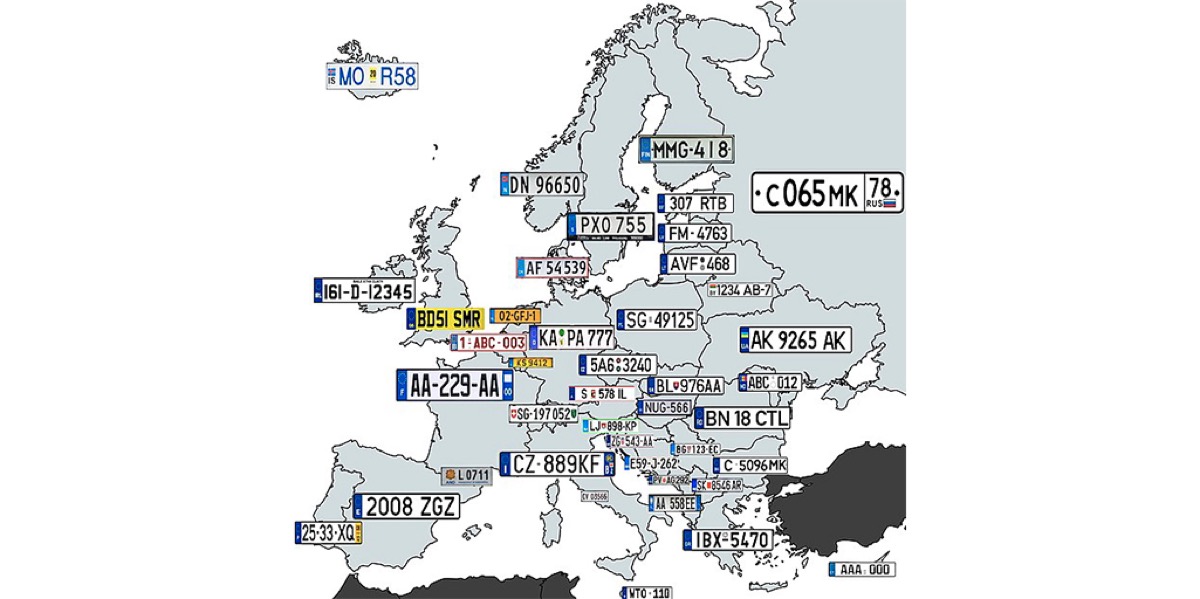
Starting then, the car license plate began with the initial or initials of the province, four numbers, and a letter, until the alphabet was exhausted and two letters were added. That lasted until September of 2000, when a European license was imposed throughout the Eu, which consists of four numbers and 3 letters, along with the European symbol and the letter Due east for España.
Digital automobile license plates
Since we're in the digital era, information technology'southward normal to suppose that it will likewise come up to license plates.
For the moment, this kind of plate is permitted simply in the United States –in California and Arizona, to be exact– along whose roads there are some 4,000 vehicles with this kind of identification.
The plates are designed by the Reviver company, and what they do is convert the messages and numbers into pixels on a digital screen similar to the ones used for electronic books.
These license plate/screens must be integrated into the auto and can also display several messages, which must be canonical, that communicate whether the car has been stolen or exhibit certain alerts.
But other digital systems, as well giving information about the vehicle and its owner, tin also facilitate automated payments, telemetry and information almost the vehicle'due south status. On the down side is the high cost: the manufacture, installation and maintenance of the digital license plates ranges from 500 to 1,000 dollars, although it is hoped that these prices volition driblet when they get more popular.
lawrenceoldideady.blogspot.com
Source: https://www.ontheroadtrends.com/discover-history-license-plates-cars/?lang=en

Post a Comment for "On the Road Again License Plates"